
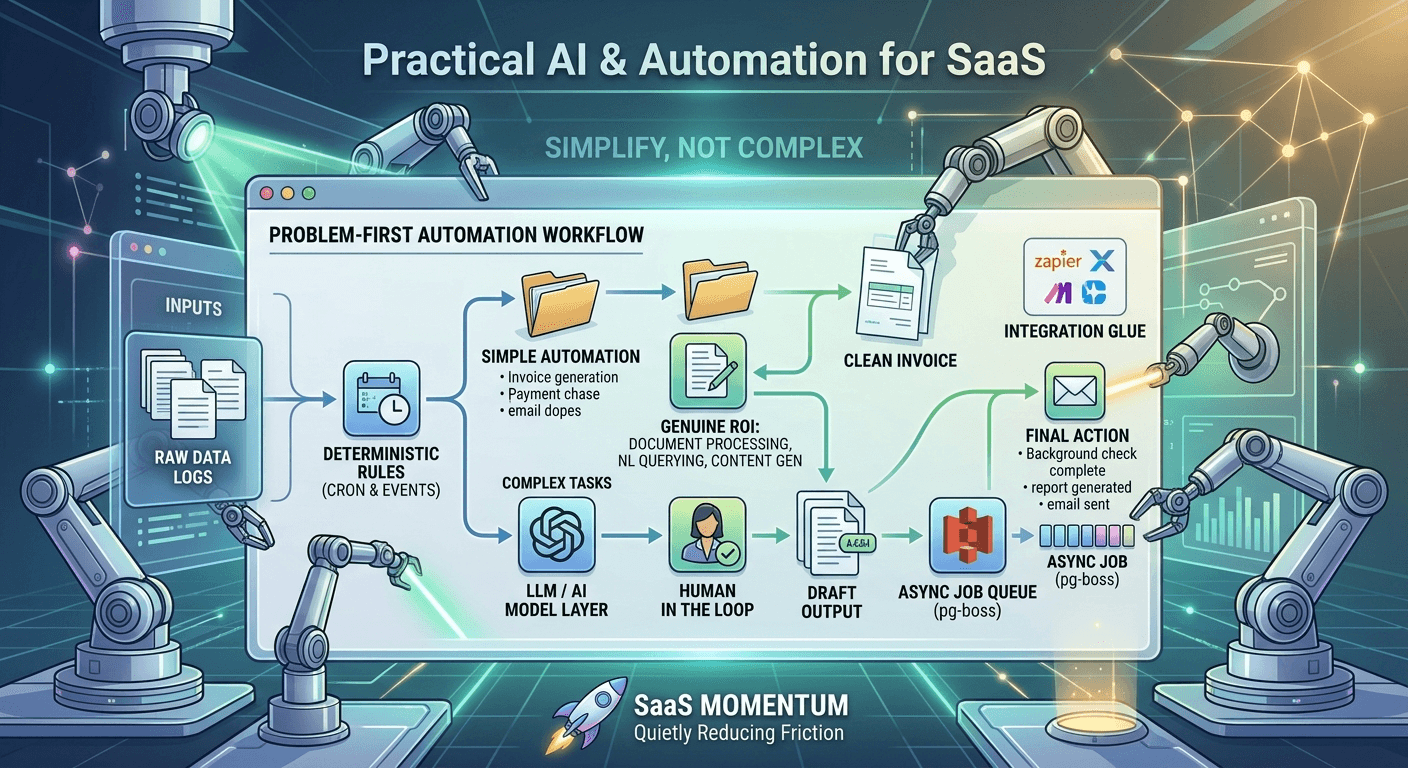
Every SaaS founder wants to sprinkle AI, but most attempts fail because they start with the model instead of the problem. At Seebify, we integrate AI into production systems only when it meaningfully reduces manual work or unlocks new capabilities.
The Right Use Cases for AI in SaaS
We’ve seen AI deliver genuine ROI in three areas: intelligent document processing (e.g., automated background‑check verification), natural language querying of internal data, and content generation with human review.
AI isn't a feature. It's an automation layer that should make your product feel simpler, not more complex. — Haseeb Farrukh, Founder @ Seebify
Building Reliable AI Pipelines
We run AI tasks asynchronously using background job queues (pg-boss). This keeps API response times fast and allows us to handle failures gracefully. Every AI output is treated as a draft—humans stay in the loop for approval or rejection.
// Example: Enqueue an AI document analysis job
await pgBoss.send('analyze-document', {
  documentId: 'abc-123',
  callbackUrl: 'https://api.example.com/webhooks/analysis',
});
Workflow Automation Beyond AI
Automation doesn’t always need AI. Simple cron jobs, event-driven triggers, and integration glue (Zapier, Make.com) can eliminate hours of manual work. We start with deterministic rules and only layer in AI where ambiguity exists.
Common automation wins we implement:
- •Automated invoice generation and payment chasing
- •Smart lead routing based on enrichment data
- •Scheduled report generation and email distribution
- •User onboarding drip sequences triggered by in‑app events
Key Takeaway
AI and automation are powerful, but they’re tools, not goals. The best SaaS products use them quietly—removing friction so users can focus on their real work. That’s the kind of AI we build.
